

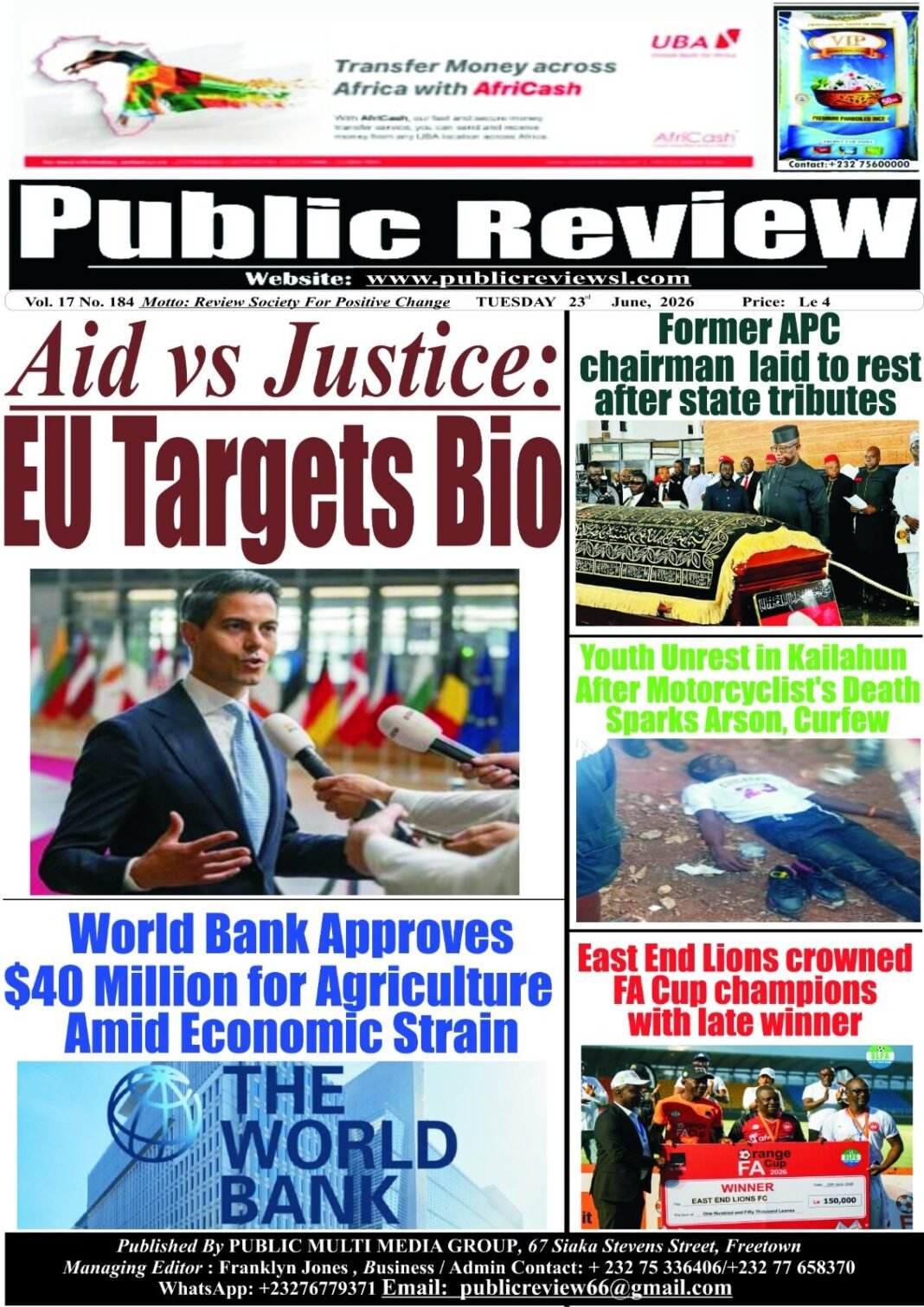

Rob Jetten said the European Union will act collectively to pressure Sierra Leone to comply with judicial requests to extradite convicted drug trafficker Jos Leijdekkers, signalling a potential escalation in tensions between Brussels and Freetown.
Jetten said he was “very happy” that all 27 EU member states had agreed to move as one, stressing that cooperation with international legal orders was non-negotiable.
“It is good that we, as 27 countries, say that we expect countries to cooperate in complying with judicial orders,” Jetten said after high-level EU discussions.
He warned that Sierra Leone’s reliance on European support could become a point of leverage, as the bloc weighs stronger measures to secure compliance.
Leijdekkers, widely known as “Bolle Jos,” has been sentenced in absentia to a combined 81 years in prison in the Netherlands and Belgium for major drug trafficking offences. He is linked to multiple large-scale cocaine shipments into Europe, including record seizures earlier this year, according to European authorities.
The Dutch government has been pushing for his extradition, arguing that failure to act undermines international efforts to combat organised crime.
Jetten urged the European Union to intensify pressure, including reviewing Sierra Leone’s access to development funding. The West African country is currently allocated about €325 million ($350 million) under the EU’s 2021–2027 aid programme.
“If all EU member states insist on cooperation, extradition becomes a much more realistic possibility,” Jetten said.
Sierra Leonean authorities have not publicly confirmed Leijdekkers’ presence in the country, and the government has previously declined to comment in detail on extradition requests.
The case has become a flashpoint in relations between the EU and Sierra Leone, highlighting broader concerns about safe havens for transnational criminal networks.
European law enforcement agencies have intensified efforts in recent years to dismantle cocaine trafficking routes from Latin America to Europe, with West Africa often cited as a key transit region.
The dispute also underscores growing EU willingness to link development assistance to governance and judicial cooperation, a policy shift that analysts say could reshape relations with partner countries.
For Sierra Leone, which relies heavily on foreign aid and development partnerships, any reduction in EU funding could have significant economic implications.