

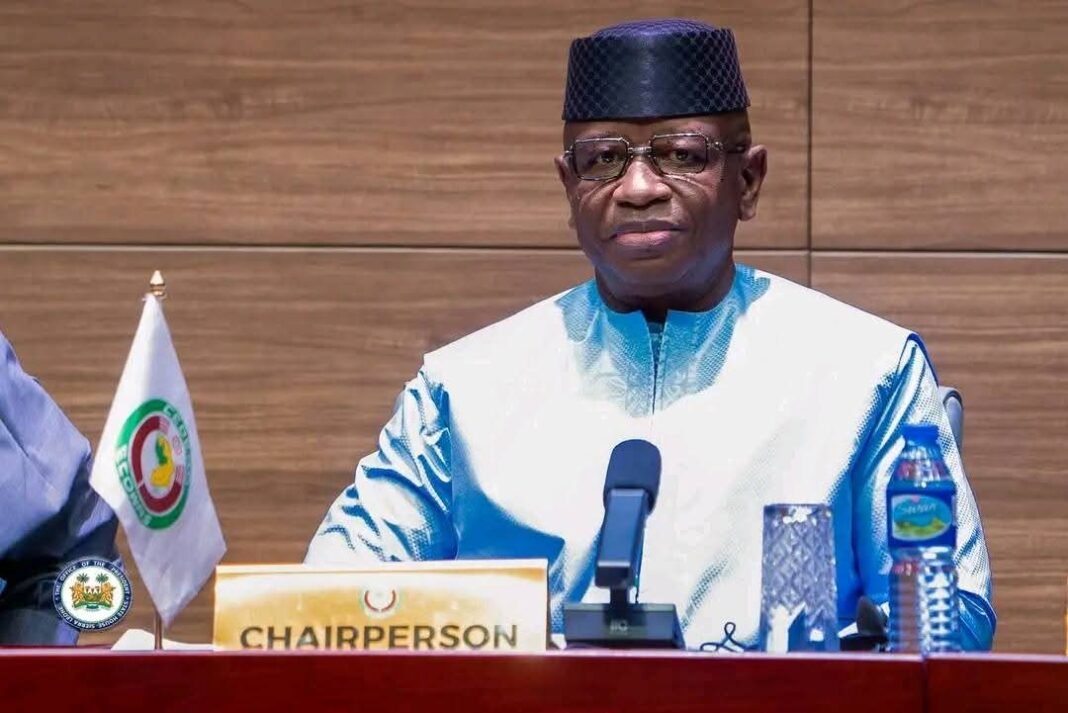

Bio prefers ECOWAS Summit while Its people endure hardship !
By Joseph Turay
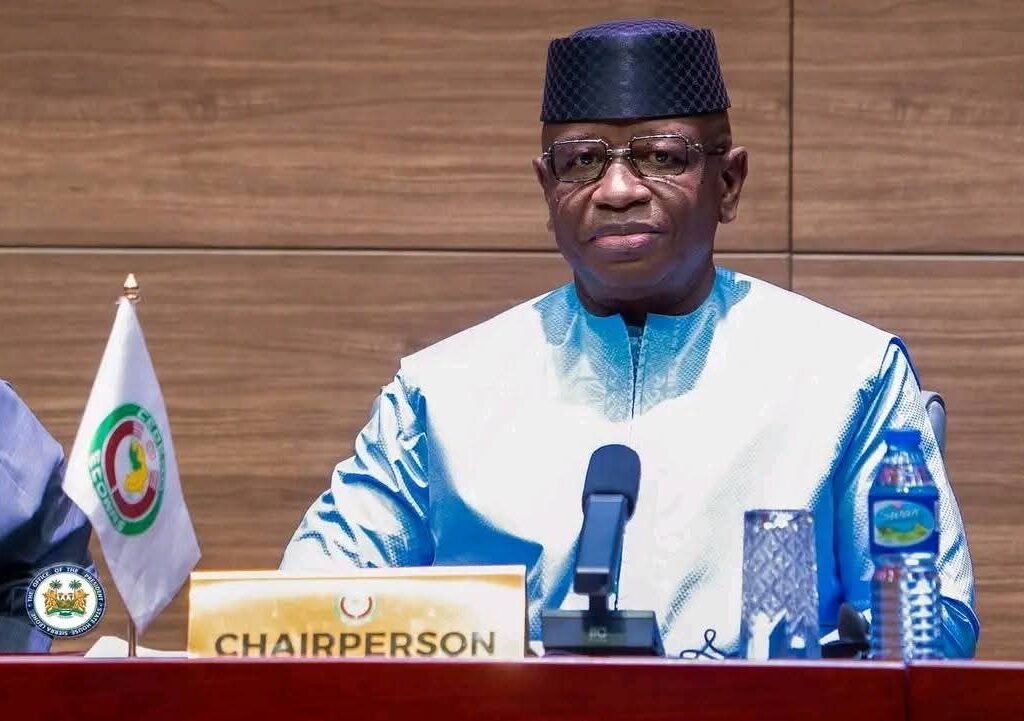
The decision by President Julius Maada Bio’s administration to host the 69th Ordinary Session of the Economic Community of West African States (ECOWAS) Authority of Heads of State and Government is being celebrated by supporters as a diplomatic milestone for Sierra Leone. But for many citizens struggling to survive, the celebration rings hollow.
This is not simply a debate about hosting an international conference.
It is a debate about priorities.
ECOWAS was established in 1975 to promote regional economic integration, peace, security, democracy, good governance and the free movement of people and goods.
Over the years, its mandate has expanded to include the defence of constitutional rule, human rights and the rule of law. These ideals are noble. They remain as relevant today as they were half a century ago.
The question, however, is whether the governments leading ECOWAS are living up to those principles; or merely invoking them while failing to address the daily struggles of their own citizens.
For many Sierra Leoneans, life has become an exhausting cycle of economic hardship. Food prices remain painfully high. Transport costs continue to rise.
Many communities experience prolonged electricity blackouts. Access to clean water remains unreliable in numerous areas. Young people struggle to find meaningful employment.
Hospitals face shortages of equipment and medicines, while doctors, nurses and teachers continue to call for better pay and improved working conditions.
Against that backdrop, it is reasonable to ask whether hosting a major regional summit should be among the government’s highest priorities.
Government officials may argue that such gatherings enhance Sierra Leone’s international standing, strengthen diplomatic relations and create opportunities for investment.
Those are legitimate objectives. But diplomatic prestige alone does not put food on the table, restore electricity to homes or create jobs for unemployed graduates.
Citizens deserve to know the full financial implications of hosting the summit.
How much public money has been committed? How were contracts awarded? What procurement safeguards were followed? Was Parliament given an opportunity to scrutinise the expenditure? What long-term economic benefits can be measured after the delegates depart?
Transparency is not an obstacle to governance. It is one of its foundations.
History also offers an important lesson.
Many Sierra Leoneans still remember the 1980 Organisation of African Unity summit hosted under former President Siaka Stevens.
It projected prestige on the international stage, yet it also became associated in public memory with costly expenditure during a period of growing economic difficulty.
Historians continue to debate the extent of its economic impact, but the episode serves as a reminder that international recognition cannot substitute for sound economic management.
Every dollar spent on ceremonial infrastructure is a dollar unavailable for another national priority.
Imagine if equivalent resources were directed toward strengthening electricity generation and transmission, expanding access to clean water, improving hospitals, purchasing essential medicines, paying health workers and teachers more competitively, repairing roads, supporting agriculture or creating vocational training programmes for young people.
The opportunity cost is impossible to ignore.
Sport offers another example.
Sierra Leone has spent years without a fully operational national stadium capable of consistently hosting major international football matches.
As a result, the national team has often been required to play home fixtures abroad, depriving local businesses, hotels, transport operators and supporters of significant economic activity.
A modern national stadium is more than a sporting venue. It can host football tournaments, athletics competitions, concerts, conferences and cultural events throughout the year. It creates employment, encourages youth participation in sport, nurtures talent and generates continuing economic activity.
Unlike a summit lasting only a few days, such an investment can deliver benefits for decades.
The same argument applies to investment in education and healthcare.
Many Sierra Leonean families continue to struggle to afford quality medical treatment, while public hospitals operate under immense pressure.
Too often, those who can afford it seek specialised healthcare abroad. The same is true for education, where many political leaders educate their children overseas while public schools continue to face resource constraints.
Citizens cannot be faulted for asking whether public investment should first improve the institutions upon which ordinary people depend every day.
ECOWAS itself must also reflect on whether it continues to command the confidence of the people of West Africa.
Across the region, citizens increasingly question whether the organisation responds consistently to democratic crises, protects constitutional governance with equal resolve or places the welfare of ordinary people above political considerations. Whether justified or not, this perception should concern every regional leader because public confidence is essential to ECOWAS’ long-term legitimacy.
The Bible reminds leaders that genuine authority is inseparable from service.
In the Gospel of Matthew, Jesus teaches that caring for the hungry, the sick and the vulnerable is among the highest responsibilities of those entrusted with leadership.
Likewise, Book of Micah 6:8 calls upon leaders “to act justly, love mercy and walk humbly.” These are timeless principles of public service. They challenge governments to measure success not by ceremonies or international applause but by the condition of the people they govern.
Ultimately, this debate is not about opposing international cooperation.
Sierra Leone should remain an active and respected member of ECOWAS. Regional dialogue on security, trade and economic integration remains vital.
But respect abroad should never come at the expense of confidence at home.
The true measure of leadership is not the number of presidential motorcades or international summits a country hosts.
It is whether citizens have reliable electricity, functioning hospitals, quality schools, decent jobs, affordable food and confidence that public resources are being managed transparently and in the national interest.
Diplomatic prestige has value.
But it cannot replace accountable governance.
As Sierra Leone hosts West African leaders, perhaps the most important question is not what visitors will see during the summit.
It is what Sierra Leoneans will continue to live with after the final delegation has departed.