


By Albert David
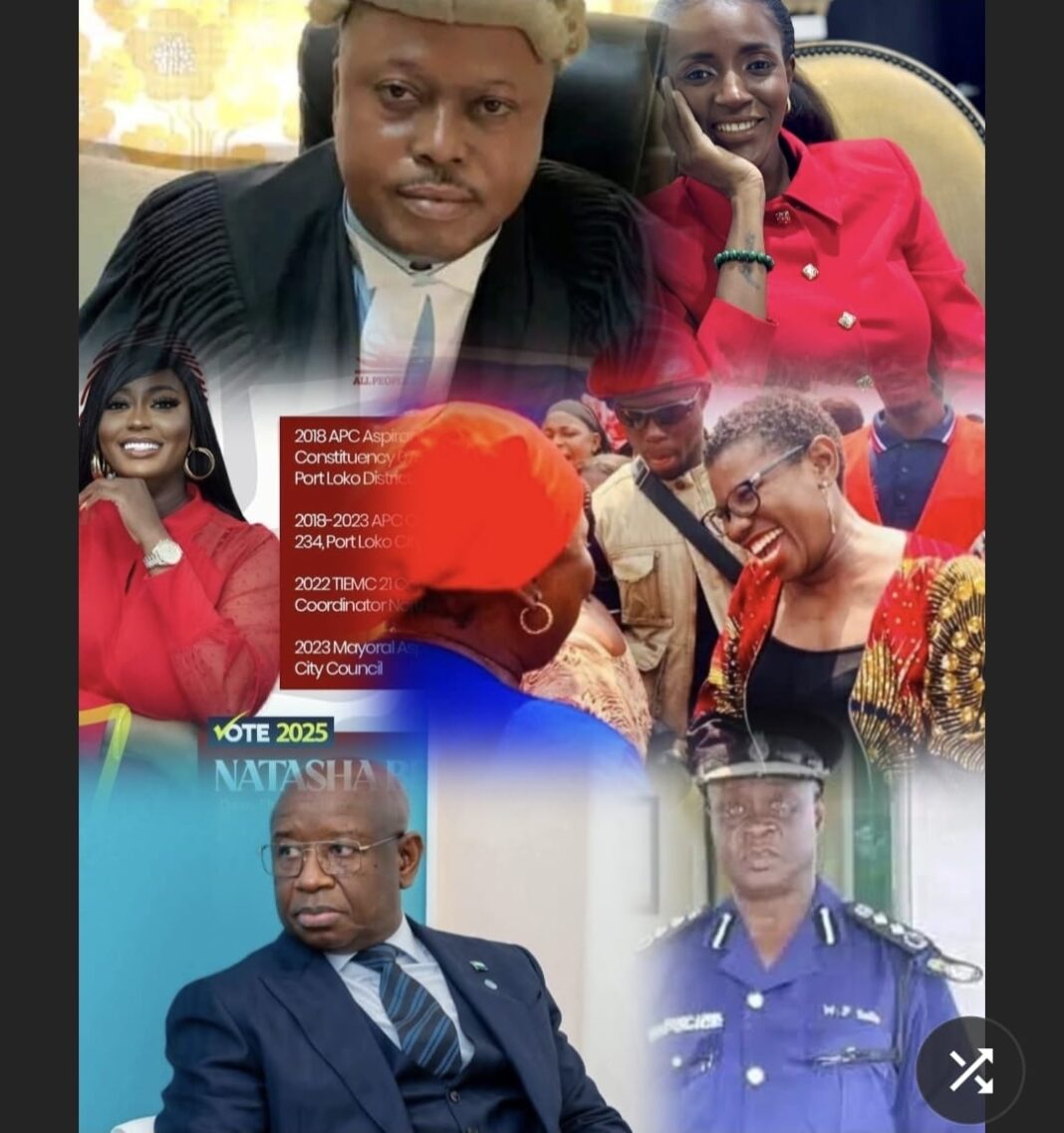
Sierra Leone’s democratic journey has never been simple, but recent patterns of state behavior toward influential female opposition figures have raised profound concerns among citizens, observers, and advocates of constitutional governance. The escalating confrontations involving the Sierra Leone Police and prominent women from the opposition, Yvonne Aki‑Sawyerr, Natasha Beckley, and now Zainab Sheriff, have generated a troubling narrative about the shrinking space for dissent, the weaponization of state institutions, and the erosion of political tolerance. These developments are not merely political disagreements. They strike at the heart of democratic ethics, institutional neutrality, and the rule of law.
Across democratic societies, women in politics already face disproportionate scrutiny, harassment, and public shaming. When state institutions appear to amplify these pressures, particularly against women aligned with opposition parties, the implications become deeply worrying.
Many observers have noted a pattern: Yvonne Aki‑Sawyerr, the widely respected Mayor of Freetown, has faced repeated public confrontations, legal pressures, and attempts at reputational damage. Natasha Beckley, a former beauty queen and philanthropist with a large public following, was subjected to state‑driven allegations, CID summons, and public humiliation that effectively silenced her political aspirations. Zainab Sheriff, a celebrated musician and outspoken civic voice, now faces a public arrest warrant, an escalation that raises serious questions about proportionality, motive, and due process. When three high‑profile women from the same opposition party experience similar forms of state pressure after declaring political ambition, it is reasonable for citizens to question whether these actions reflect legitimate law enforcement or politically motivated intimidation.
In any democracy, state institutions, especially the police, judiciary, and investigative bodies, must operate above partisan influence. Their legitimacy depends entirely on public trust. When these institutions appear to be used as instruments of political retaliation, several dangerous consequences follow:
Citizens lose confidence in the fairness of the system. Opposition voices become fearful of participation. Women, in particular, are discouraged from entering public life, and the international community questions the country’s democratic credibility. Institutional neutrality is not a luxury. It is the backbone of democratic stability.
Political tolerance is not simply about allowing opponents to exist. It is about respecting their right to speak, organize, criticize, and compete freely. Democracies thrive when opposition voices are protected, not persecuted. Criticism is treated as a civic contribution, not a threat. Elections are contested on ideas, not intimidation and when citizens feel safe aligning with any political party. When governments, any government, begin to treat dissent as a crime, democracy begins to decay from within.
Public shaming campaigns, state‑sponsored allegations, and sensationalized accusations create a toxic political environment. They undermine due process, distort public perception, and weaponize the court of public opinion. Such tactics are unethical, because they bypass legal fairness. Devastating, because they destroy reputations before facts are established. Misleading, because they shape narratives rather than reveal truth, and manipulative, because they exploit public emotion for political gain. A democracy cannot function when narratives replace evidence.
The rule of law demands due process, not selective prosecution. Evidence‑based investigations, not politically convenient accusations. Proportionality, not excessive force or public spectacle, and equality before the law, not partisan targeting. When the law becomes a political weapon, it ceases to be law at all.
Globally, democratic best practices emphasize protection of opposition rights, safeguarding of civic space, gender equality in political participation, non‑interference of the executive in policing and justice, and transparent, accountable governance. Any deviation from these principles risks isolating the country diplomatically, undermining investor confidence, and damaging its international reputation.
The concerns raised by citizens, civil society, and observers are not attacks on the state, they are appeals for the preservation of democratic integrity. Sierra Leone has worked too hard, sacrificed too much, and come too far to allow political intolerance to reverse its progress. A stable democracy requires state institutions that serve the nation, not a party. A political culture that welcomes dissent, not punishes it, a justice system that protects rights, not suppresses them, and a society where women can lead without fear.
The treatment of Yvonne Aki‑Sawyerr, Natasha Beckley, and Zainab Sheriff is not just about individuals. It is about the future of political freedom in Sierra Leone. The country deserves better. Its democracy deserves better. Its citizens deserve better.