


By Joe Turay
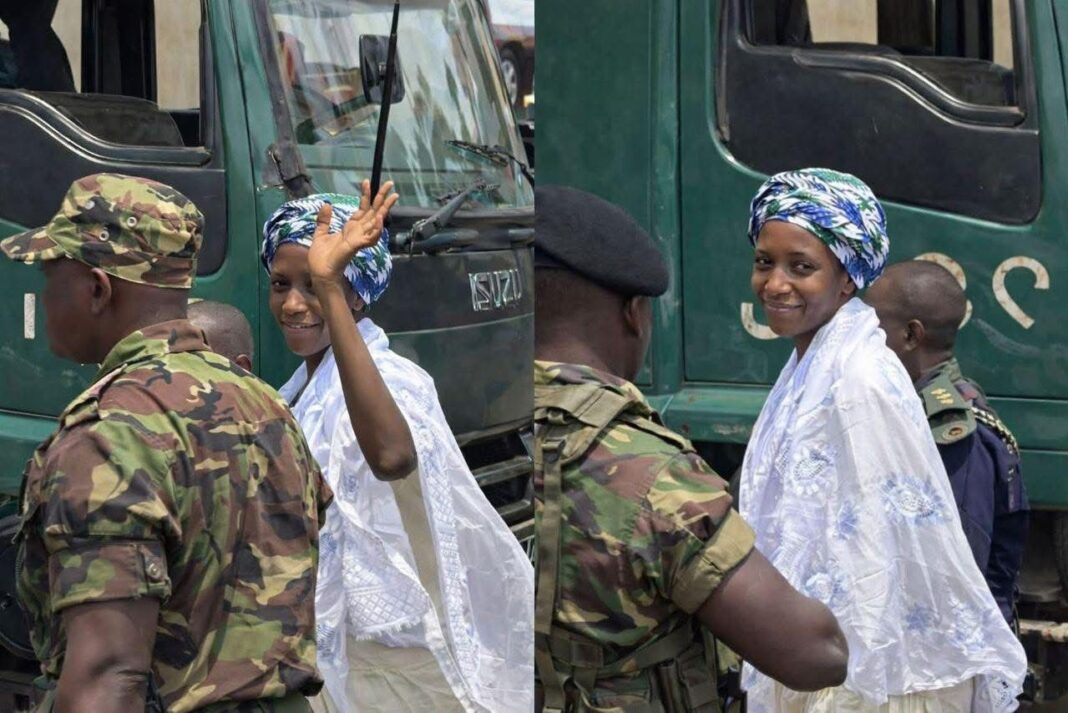
The continued denial of bail to Zainab Sheriff is increasingly being viewed by critics as more than a routine legal matter. Instead, it is seen as a troubling signal about the state of free speech, civil liberties, and democratic accountability in Sierra Leone.

Sheriff: a model, entertainer, and outspoken political activist—has become a symbol of resistance for many, particularly young people and women, who view her as one of the few public figures willing to openly challenge government policies and speak out on issues affecting ordinary citizens. Her prosecution on charges of incitement and threatening language, stemming from a political speech, has sparked wider debate about whether dissent is being criminalized.
At the heart of the controversy is the question of constitutional rights. Section 25 of the Constitution of Sierra Leone (1991) guarantees freedom of expression, including the right to hold opinions and to receive and impart ideas without interference. Legal analysts argue that, in democratic societies, speech at political rallies; especially critical speech, should be afforded the highest level of protection unless it directly incites violence.
Beyond national law, Sierra Leone is also bound by international commitments. The Universal Declaration of Human Rights (Article 19) and the International Covenant on Civil and Political Rights (ICCPR, Article 19) both affirm the right to freedom of expression. Similarly, the African Charter on Human and Peoples’ Rights (Article 9) guarantees every individual the right to express and disseminate opinions within the law.
Critics argue that Sheriff’s prolonged detention, without the presentation of substantive evidence in open court, undermines not only these legal protections but also the principle that bail should generally be granted for non-violent offences. In Sierra Leone’s legal tradition, denial of bail is expected to be the exception, not the rule, requiring clear and compelling justification.
Her case has therefore become a lightning rod for broader frustrations. Civil society voices claim it reflects a pattern in which dissenting opinions—particularly those critical of governance, corruption, and economic hardship—are increasingly met with intimidation, arrests, or legal pressure. Allegations frequently cited by activists include concerns over rising living costs, limited access to basic services such as water and electricity, weaknesses in the healthcare system, and the impact of drug trafficking on national stability. While these claims vary in evidence and remain contested, they form part of the grievances being voiced by sections of the population.
More troubling for observers is the perception that state institutions; including elements of the security sector and the courts; are being used, or at least seen to be used, to deter criticism. Reports and commentary from civil society groups have raised concerns about arrests following political expression, as well as claims; difficult to independently verify; of intimidation and arbitrary detention.
There are also growing accusations of political complicity across party lines. Some critics allege that certain opposition figures have failed to robustly challenge governance issues, instead prioritizing personal or political interests. Claims that individuals within opposition ranks may be cooperating with those in power for personal gain are widely discussed in public discourse, though such allegations require careful scrutiny and substantiation.
Against this backdrop, Sheriff’s supporters portray her not as a defendant, but as a figure of courage. In a political environment where many are perceived to remain silent, she is seen as part of a small but vocal group; particularly among women; willing to confront authority and demand accountability.
Her continued detention, they argue, risks reinforcing a chilling effect: discouraging citizens from speaking openly about governance, corruption, and social conditions. In democratic systems, the strength of institutions is measured not by how they respond to praise, but by how they tolerate criticism.
Ultimately, the case raises fundamental questions: Are Sierra Leone’s constitutional guarantees of free expression being upheld in practice? Are legal processes being applied impartially? And can citizens safely exercise their right to hold leaders accountable?
As Sheriff awaits her next court appearance, her case has already transcended the courtroom. It has become a test of Sierra Leone’s commitment to the rule of law, democratic freedoms, and the space allowed for dissenting voices in national discourse.