


By Joseph Turay
Sierra Leone is confronting a troubling paradox. Years of advocacy, legislation and political will have succeeded in reducing adult sexual exploitation of schoolgirls, yet teenage pregnancy continues to rise at alarming levels — increasingly driven not by adult men, but by adolescents themselves.
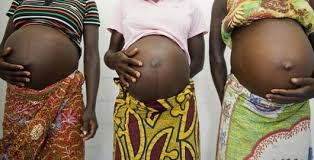
Health and education data indicate that of more than 306,000 recorded births, an estimated 70–80 percent involved teenage girls. This statistic alone signals a deepening social crisis that requires urgent, nuanced policy attention.
Historically, teenage pregnancy in Sierra Leone was largely linked to relationships between underage girls and older men. Many schoolgirls entered such relationships to meet basic needs — food, school supplies, sanitary materials — in contexts where parental or community support was limited. Teachers and other authority figures were often implicated, and such relationships, though illegal, were once socially tolerated in some communities.
Over the past decade, that narrative has shifted significantly. Legislative reforms, including the Child Rights Act, stronger sexual offences laws, and sustained advocacy campaigns have reshaped public attitudes. The most prominent of these efforts has been the Hands Off Our Girls campaign championed by First Lady Fatima Bio, which brought national and international attention to sexual exploitation, child marriage and abuse.
These interventions have yielded measurable gains. Adult men are now far more cautious, reports of teacher-student exploitation have declined, and state institutions have strengthened enforcement mechanisms, including specialised sexual offences courts. Government investment in girl-child education and material support has also expanded.
Yet, while one door has closed, another appears to have opened.
Across both rural and urban communities, parents and local leaders report a rise in pregnancies involving underage boys — schoolmates of the girls themselves. The “sugar daddy” phenomenon may have faded, but peer-to-peer sexual activity among teenagers has increased, often without adequate guidance, responsibility or consequence.
This shift has unsettled families. Many parents argue that policies designed to protect girls — particularly the Inclusive Education policy that allows pregnant girls and young mothers to remain in school — may have produced unintended effects. Instead of acting as a deterrent, some believe the policy has weakened social restraint and parental authority.
In certain communities, traditional by-laws once attempted to separate boys and girls or restrict school attendance for male perpetrators, but such measures have proven inconsistent and controversial. Meanwhile, cases of very young girls continuing their education throughout pregnancy have become increasingly visible, fuelling debate about whether current policies strike the right balance between protection, accountability and prevention.
Parents’ concerns are not rooted in opposition to education, but in fear of a cycle of dependency and hardship. Teenage boys who father children are rarely economically capable of supporting them, leaving families — often already struggling — to absorb the burden. Grandmothers are becoming caregivers to both daughters and grandchildren, compounding poverty and social stress.
What is emerging is not merely a moral panic, but a policy dilemma.
Teenage pregnancy is once again producing child mothers at a scale reminiscent of the war and immediate post-war years — a period marked by social breakdown and limited safeguards. The difference today is that this crisis is unfolding within a framework of progressive laws that may not yet be matched by adequate behavioural education, parental engagement, or community enforcement.
Sierra Leone now faces a critical question: how to protect girls’ rights without normalising early pregnancy, and how to promote inclusive education without eroding deterrence.
Many parents and community leaders are calling for a comprehensive review of existing policies, advocating a model that combines education access with stronger preventive measures, shared responsibility between boys and girls, and reinforced values around adolescence, sexuality and accountability.
Teenage pregnancy is not merely a health or education issue. It is a social warning signal. Ignoring its changing dynamics risks undoing hard-won gains and placing another generation of children — both mothers and infants — at the margins of opportunity.
The moment calls for reflection, recalibration and action — before today’s protection policies become tomorrow’s regrets.