

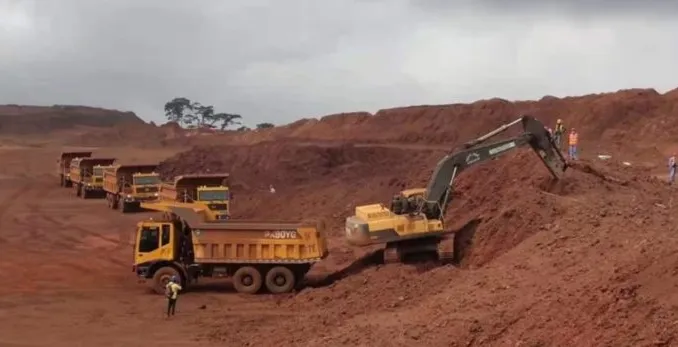

Sierra Leone’s mining industry is witnessing unprecedented growth in exports, production, and local participation, the Minister of Mines and Mineral Resources, Julius Daniel Mattai, announced at the Civic Festival 2025 in Freetown.
Speaking on the theme, “The Economy, Energy and Productivity,” Minister Mattai highlighted that mineral exports in the first three quarters of 2025 approached US$900 million, marking a 14–15 percent increase compared to 2024. Non-tax revenues from license fees and royalties reached US$53 million by September, with projections of US$60 million by year-end, reflecting the impact of recent policy reforms.
Minister Mattai noted that 34 large-scale mining licenses are currently active, with multiple projects producing and several others nearing completion. By 2027, most operations are expected to be fully operational, expanding Sierra Leone’s mineral production base.
He emphasized the importance of exploration, pointing out that lifting past moratoriums has allowed the country to attract long-term investment and tap its vast geological potential. Small-scale mining licenses have also grown from just two in 2018 to 27 licenses today, covering gold, diamonds, and heavy mineral sands, highlighting improved regulation and local participation.
A key focus of the presentation was industrial gold mining. Sierra Leone began issuing large-scale gold licenses in 2019–2020, with FG Gold and Gold Lion leading developments in Valunia Chiefdom and Kumahun. The Minister projected that annual official gold exports could reach 10–11 metric tons, up from 127 kilograms in 2024, boosting revenues and employment.
In the heavy mineral sands sector, a landmark achievement was announced: a company operating in this area is now fully owned and led by Sierra Leoneans, aligning with the Government’s Local Content Policy.
Community benefits have also risen dramatically. The Community Development Fund grew to over US$6.5 million in 2025, up from US$1.8 million in 2024, reflecting the new minimum allocation of 1 percent of gross exports for mining communities. All mining license holders are now required to sign Community Development Agreements, pay surface rents, and comply with environmental and development obligations.
Minister Mattai concluded by affirming that the reforms aim to increase productivity, expand participation, and ensure that mineral wealth delivers tangible development outcomes for communities and the national economy.
“Our goal is to ensure that the growth of the mining sector translates into lasting benefits for the people of Sierra Leone,” he said.
By Jane Dura