

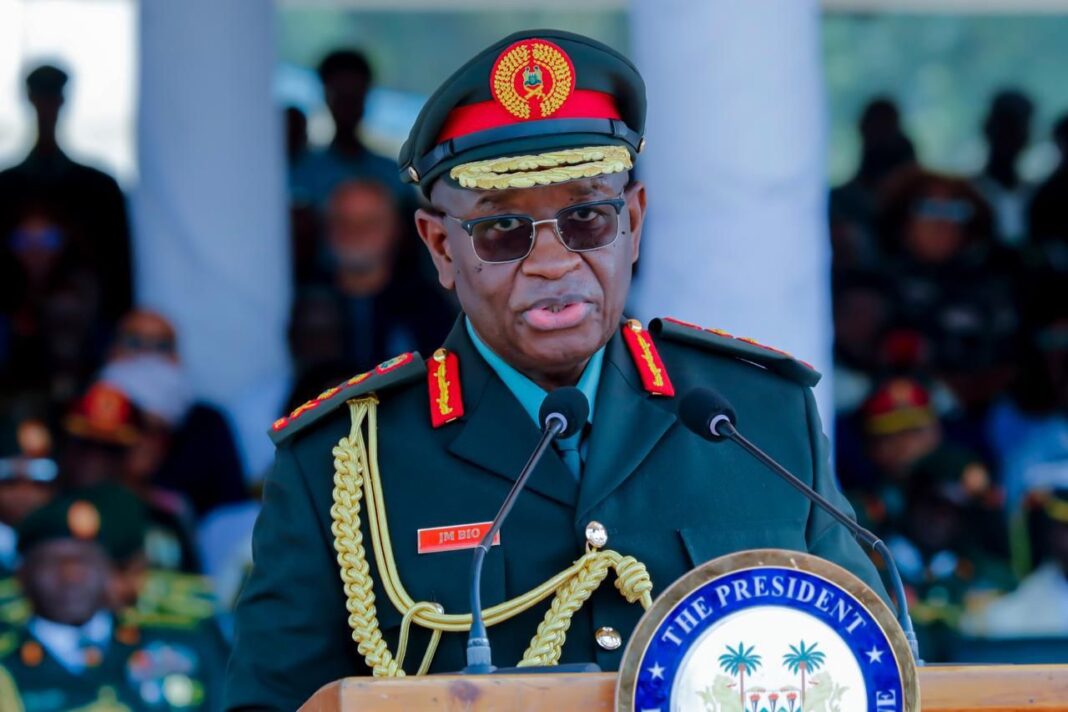

Bio , E don so Now ! People DAE suffer too Mus !
By Joe Turay
The Government of Sierra Leone’s decision to increase fuel prices by 12.3 percent, raising the pump price of petrol and diesel from Le 28.50 to Le 32.00 per litre, has sparked growing concern among citizens already struggling under severe economic pressure.
The new price adjustment, announced by the National Petroleum Regulatory Authority (NPRA) and effective March 7, 2026, is expected to trigger a chain reaction across the economy, driving up the cost of transportation, food, and basic services.
While authorities say the increase reflects international market conditions, freight charges, insurance costs, port fees and exchange rate fluctuations, many Sierra Leoneans argue that the government continues to place the burden of economic instability on ordinary citizens rather than exploring measures to cushion the impact.
Fuel is the backbone of Sierra Leone’s transport and commercial systems. Any increase in its price inevitably pushes up the cost of living. Within hours of the announcement, transport operators in several parts of the country began discussing fare increases, a development that will immediately affect workers, traders and students who rely on public transportation daily.
For market women and small-scale traders, the consequences could be severe. Higher transport costs mean higher prices for goods transported from rural areas to urban markets. As a result, basic commodities such as rice, vegetables, fish and other essentials are likely to become more expensive.
Economists and civil society observers warn that the increase could worsen the already difficult economic situation facing many households.
Sierra Leone has been battling high inflation, unemployment, and currency depreciation in recent years.
Many families are already struggling to afford food, school fees and healthcare. With the new fuel price increase, the financial pressure on ordinary citizens is expected to intensify.
Some government supporters have attempted to link the increase to tensions and fighting involving Iran and developments in the global oil market. However, critics argue that it is difficult to justify such a sharp adjustment within just a week of emerging international tensions. They point out that many African countries have not immediately adjusted their pump prices and are still maintaining their previous fuel prices.
Observers also question the timing of the increase, noting that the country is still relying largely on existing fuel stock that had already been imported before the recent developments in the international market.
In such circumstances, critics argue, a sudden increase raises concerns about whether the adjustment is justified at this time.
“There is a growing perception that economic decisions are being made without fully considering the suffering of the people,” said one civil society activist in Freetown. “Every time fuel prices go up, the cost of everything goes up, but salaries remain the same.”
The NPRA pricing structure includes several levies and charges, such as excise duty, road user charges, fuel marking fees, and contributions to the Infrastructure Development Fund, all of which are incorporated into the final pump price.
Critics argue that these additional charges make fuel unnecessarily expensive and place a disproportionate burden on the public.
Many citizens believe that, at a time when the population is facing significant economic hardship, the government should be looking for ways to cushion the burden on the people rather than introducing policies that could further deepen the cost-of-living crisis.
Transport unions and consumer groups are now calling on the government to reconsider the increase or introduce relief measures, such as reducing certain taxes and levies on petroleum products.
Without such interventions, analysts warn that the price hike could further deepen public frustration and widen the gap between government policy and the everyday realities faced by the population.
For the average Sierra Leonean already navigating a difficult economic climate, the latest fuel price increase is not just another policy announcement :
it is yet another reminder of the growing cost of survival.