


By Joseph Turay
Public Review Newspaper , October 28, 2026
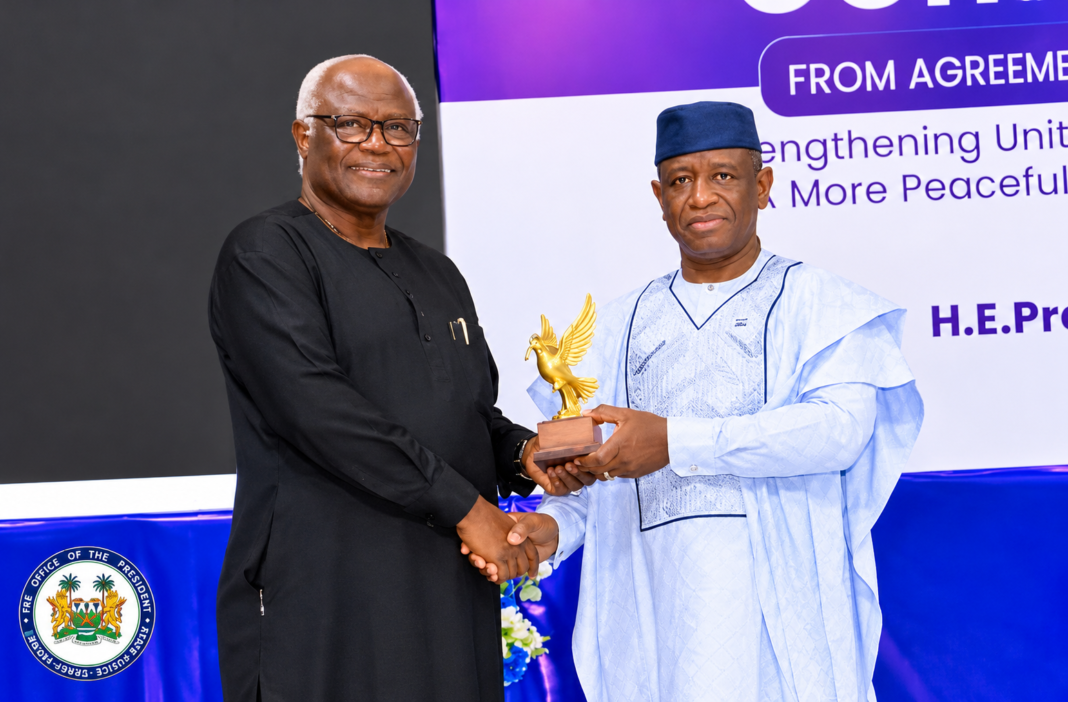
As Sierra Leone’s political leaders, government officials, civil society representatives and human rights advocates gather at Bintumani for the National Unity and Social Cohesion Conference, the country must confront an uncomfortable question: after decades of peace conferences, political agreements and reconciliation initiatives, why do so many of the conditions that undermine public trust remain unresolved?
The conference, convened by the Independent Commission for Peace and National Cohesion (ICPNC), carries an important message. But its success will not be measured by speeches, photographs or declarations. It will be measured by whether Sierra Leoneans experience greater justice, security, economic opportunity and respect for their fundamental rights.
There is a troubling contradiction in preaching national unity while ordinary citizens struggle to afford food, healthcare, transportation and education, while young people face limited employment opportunities and while questions about the independence and accountability of public institutions persist. Leaders may gather in an air-conditioned conference hall to discuss peace, but the credibility of their message will ultimately be determined by the realities confronting citizens outside it.
Sierra Leone’s history offers important lessons. The civil war, which officially ended in 2002, was rooted in complex political, economic and social grievances, including exclusion, injustice, corruption and institutional failure. The Bintumani peace process of the 1990s and subsequent reconciliation efforts formed part of the country’s struggle to establish lasting peace and democratic governance.
Yet peacebuilding cannot be treated as a completed task simply because the guns have fallen silent and elections have been held. A society may avoid widespread violence while continuing to experience deep mistrust, economic insecurity and unresolved grievances.
The fundamental question is whether successive governments have done enough to ensure that citizens can seek justice, hold public officials accountable and express disagreement without fear. If those conditions remain uncertain, national unity will continue to be an aspiration rather than a lived reality.
Justice must begin with the institutions responsible for protecting citizens.
No government can credibly promote social cohesion while allegations of unlawful detention, police harassment, excessive force or politically motivated prosecution remain unanswered. Such allegations must be investigated fairly, and conclusions must be based on evidence rather than political loyalties.
The same principle applies to reported incidents involving security personnel and civilians, including the alleged assault of a Waka Fine driver by military officers. Where wrongdoing is established, those responsible must face appropriate consequences under the law.
The issue is not whether the government should be presumed guilty whenever allegations emerge. It is whether citizens can trust that complaints against powerful individuals and state institutions will receive independent, transparent and credible investigation.
A peaceful country is not one in which people are afraid to speak. It is one in which they can express criticism, challenge public officials and demand accountability without unlawful intimidation.
The administration of justice also deserves urgent attention. Concerns about prolonged pretrial detention, delayed court proceedings, overcrowded prisons and inadequate detention conditions require practical responses. The government, judiciary, legal aid providers and human rights institutions should work together to review detention records, address unjustified delays and ensure that everyone in custody receives due process and humane treatment.
Anyone unlawfully detained should be released, while those facing legitimate charges should receive fair and timely hearings. These principles must apply regardless of a person’s political affiliation, social standing or relationship with those in power.
For many Sierra Leoneans, national unity is not an abstract political concept. It is connected to whether they can feed their families, pay school fees, obtain medical treatment and find decent work.
High living costs, insecure employment, inadequate public services and limited opportunities for young people can deepen frustration and weaken confidence in government. Citizens who see little improvement in their circumstances may reasonably question the value of repeated promises about national development.
This does not mean poverty automatically leads to conflict. It means that lasting peace becomes harder to sustain when legitimate grievances are ignored and peaceful avenues for addressing them appear ineffective.
Economic justice must therefore form part of the national cohesion agenda. Fair wages, employment creation, improved healthcare, reliable electricity and transparent management of public resources are not separate from peacebuilding; they help establish the conditions in which citizens feel included in their country’s future.
Corruption also demands serious attention. When public resources fail to translate into better schools, hospitals, roads and essential services, trust deteriorates. Credible audits, transparent procurement, independent investigations and evidence-based prosecutions are necessary to demonstrate that public office is a responsibility rather than a private entitlement.
The commission has an important responsibility beyond convening meetings. It should identify specific barriers to national cohesion, recommend practical reforms, establish implementation deadlines and publish regular progress reports.
The government should also explain the cost of the conference, its funding arrangements and the expected outcomes. Public expenditure on dialogue is not inherently wasteful; preventing conflict and building trust are legitimate public objectives. But taxpayers deserve evidence that such spending produces results.
A conference declaration will mean little if it simply repeats commitments made at previous gatherings. Each recommendation should identify the institution responsible, the deadline for implementation and the evidence by which progress will be assessed.
The process must also include people whose experiences are often absent from elite political discussions: detainees and their families, victims of alleged abuses, journalists, workers, young people and communities struggling with poverty. National unity cannot be built solely through agreements among political leaders while ordinary citizens remain spectators.
Political disagreement must also be treated as a normal feature of democracy. Criticism of a government is not hostility towards Sierra Leone, just as opposition to a political party is not opposition to the nation. The police, military, courts and civil service must serve the public impartially, while oversight institutions must be able to scrutinise those in power without fear or favour.
Opposition parties, too, must respect democratic rules and reject intimidation. National cohesion requires responsibility from every political actor, not merely those occupying government offices.
President Julius Maada Bio and the conference organisers have an opportunity to demonstrate that this gathering will produce practical change. That means protecting freedom of expression, addressing unlawful detention, strengthening judicial independence, investigating alleged abuses, improving public services and ensuring accountability for the use of taxpayers’ money.
The public should be able to assess progress through transparent reporting rather than being asked to accept assurances at face value.
Ultimately, the success of this conference will not be determined at Bintumani. It will be determined in police stations where citizens seek protection, courtrooms where people await justice, hospitals where patients need treatment, households struggling with food costs and communities where young people are searching for opportunities.
Sierra Leone has paid an enormous price for peace. Its citizens deserve more than repeated declarations that unity is important. They deserve institutions they can trust, leaders who accept scrutiny and a state that protects their rights while improving their living conditions.
Peace cannot be sustained by political speeches alone. It must be built through justice, accountability, inclusion and economic dignity.
If the Bintumani conference is to mean anything, its legacy must be measured not by what leaders promise today, but by what changes in the lives of Sierra Leoneans tomorrow.